In today’s tech landscape, many initiatives no longer fall neatly into just “software” or “infrastructure” categories. Whether it’s implementing a cloud-native application, integrating SaaS with on-prem systems, or building a platform supported by microservices and hybrid cloud, modern projects often span both realms. For project managers, this means navigating the complexity of hybrid projects—those that require coordination between infrastructure and software development teams.
So how can you effectively manage a hybrid IT project without letting timelines, teams, or technical details fall through the cracks?
🔄 Understand the Dual Nature of Hybrid Projects
Hybrid projects blend the physical and the digital. They may include:
- Migrating a legacy system to the cloud (Infrastructure) while rebuilding the UI (Software)
- Deploying a new SaaS product that requires SSO, firewall changes, and API customization
- Launching mobile apps that depend on a cloud-based backend, infrastructure provisioning, and DevOps automation
As a PM, it’s crucial to recognize that success depends equally on both sides and that delays in one can stall the entire initiative.
🧩 Align Stakeholders and Teams from the Start
Hybrid projects typically involve a mix of:
- Cloud architects, infrastructure engineers, and InfoSec (Infrastructure)
- Developers, QA testers, product owners (Software)
- External vendors, security auditors, and change control boards
Bring everyone together early with a joint kickoff meeting that outlines scope, interdependencies, and how each team contributes to the shared goal. Clarify roles, points of contact, and expected collaboration methods.

📅 Use Two Project Tracks with a Unified Milestone Plan
One of the most effective techniques for hybrid projects is managing two parallel tracks—one for infrastructure, one for software—but tying them to common milestones. For example:
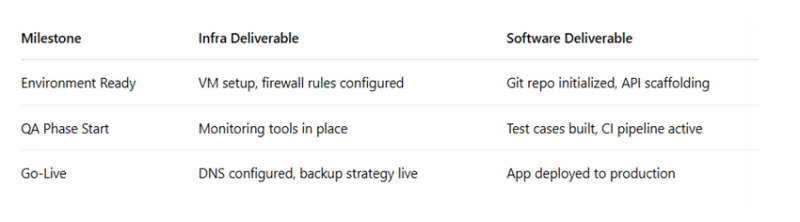
This approach keeps both streams moving while ensuring alignment on major checkpoints.
🛠️ Choose Tools That Integrate Across Disciplines
When managing hybrid projects, use platforms that allow visibility across both infrastructure and software activities. For example:
- Jira + Confluence for backlog tracking and documentation
- ServiceNow for change management and infrastructure requests
- Azure DevOps or GitHub Projects for unified code and deployment pipelines
Make sure your toolset supports transparency and avoids siloed workflows.
🚨 Manage Risks Unique to Hybrid Projects
Hybrid projects carry compounded risk:
- Software may be ready before the environment is provisioned
- Infrastructure may be delayed by procurement or vendor dependencies
- Security reviews may stall both tracks
Mitigate these by incorporating buffer time, confirming dependencies weekly, and conducting joint risk reviews.
✅ Final Thoughts
Bridging infrastructure and software workstreams is no small feat. But with clear planning, dual-track execution, and shared milestones, project managers can bring hybrid teams together to deliver complex, business-critical solutions on time.
The future of IT delivery is hybrid—and project managers who master both sides will lead the charge.
#HybridProjects #ITProjectManagement #AgileDelivery #InfrastructurePM #SoftwareDevelopmentPM #CloudMigration #DevOps #DigitalTransformation #ProjectManagerTips #ManagingProjectsTheAgileWay

About the Author
Kimberly Wiethoff, MBA, PMP, PMI-ACP is an AI Transformation Program Leader specializing in enterprise digital transformation, AI-enabled delivery, PMO leadership, AI governance, Agile program execution, cloud transformation, and complex portfolio delivery.
Through Managing Projects the Agile Way, she shares practical strategies for modernizing project and program delivery, strengthening PMO leadership, and preparing organizations and leaders for the future of AI-enabled program management.
Download Document, PDF, or Presentation
Author: Kimberly Wiethoff, MBA, PMP, PMI-ACP