In today's digital world, a healthcare provider's online reputation has become just as important as the quality of care they deliver. Patients no longer rely solely on referrals from family members or friends when choosing a doctor, dentist, hospital, or medical specialist. Instead, they begin their search online by reading reviews, visiting websites, checking social media profiles, and comparing healthcare providers before making an appointment. This shift in patient behavior has made online reputation management (ORM) an essential part of every healthcare organization's marketing strategy.
Whether someone is looking for a primary care physician, a dental clinic, a pediatric specialist, or a private hospital, their first impression is often formed long before they walk through the door. A healthcare provider with positive reviews, updated online information, professional communication, and helpful educational content is far more likely to gain a patient's trust than one with outdated information or poor online feedback.
Guest Author: James Harris - EprofileTech
Healthcare is a trust-based industry. Patients are making decisions that directly affect their health and well-being, so they naturally seek providers who demonstrate credibility, professionalism, and consistent patient satisfaction. Even one negative experience shared online can influence how potential patients perceive a practice. On the other hand, a strong online reputation built through authentic reviews, transparent communication, and patient-focused engagement can significantly increase appointment bookings and long-term patient loyalty.
The rapid growth of digital platforms has also changed how healthcare organizations compete. Clinics and hospitals are no longer competing only with nearby providers; they are competing with every practice that has a strong online presence. Search engines, online review platforms, and social media have become powerful tools that influence patient decisions every day. As a result, healthcare providers must actively monitor and manage their online reputation instead of reacting only when problems arise.
Research from Gartner highlights that customer experience has become a major competitive differentiator across industries, including healthcare. Organizations that consistently deliver positive digital experiences are more likely to build customer trust, strengthen loyalty, and improve long-term business performance. These insights reinforce the importance of managing every online interaction that shapes a patient's perception of a healthcare provider.
Similarly, Forrester emphasizes that trust, customer experience, and personalized engagement are essential factors influencing customer decision-making. In healthcare, these principles directly affect how patients evaluate providers, interact with healthcare organizations, and decide where to seek treatment.
In this article, we'll explore how online reputation management influences patient acquisition, why digital trust matters more than ever, and how healthcare organizations can strengthen their online presence to attract new patients while retaining existing ones.

Why Online Reputation Matters in Healthcare
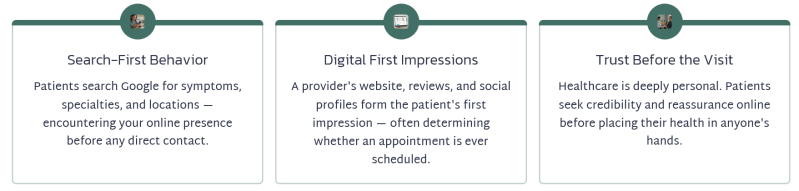
Healthcare decisions are deeply personal. Unlike purchasing a product or choosing a restaurant, selecting a healthcare provider involves concerns about safety, expertise, communication, and long-term care. Patients want reassurance that they are placing their health in capable hands, and much of that reassurance now comes from online information.
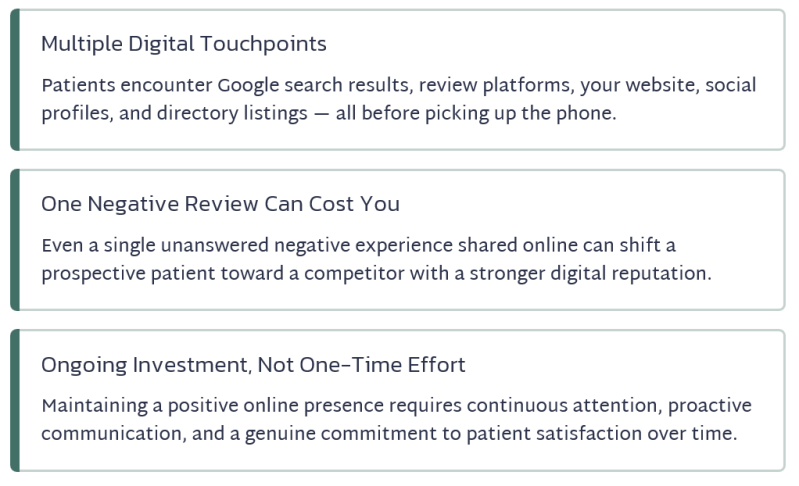
When potential patients search for a medical practice, they typically encounter several digital touchpoints before making contact. These may include Google search results, online reviews, the provider's website, social media pages, healthcare directories, and local business listings. Every one of these platforms contributes to the provider's overall reputation.
A professional website that clearly explains services, physician qualifications, office hours, and appointment options creates confidence. Positive patient testimonials reinforce trust by demonstrating real experiences. Active social media profiles that share health tips and community updates show that the practice values patient education and engagement. Together, these elements create a positive digital impression that encourages prospective patients to schedule appointments.
Conversely, inconsistent business information, outdated websites, unanswered negative reviews, or inactive social media profiles may create uncertainty. Even if the quality of medical care is excellent, a poor online presence can discourage patients from reaching out. In many cases, patients simply move on to another provider with a stronger digital reputation.
Healthcare organizations should therefore view online reputation management as an ongoing investment rather than a one-time marketing activity. Maintaining a positive online presence requires continuous attention, proactive communication, and a commitment to patient satisfaction.
How Patients Research Healthcare Providers Online
Today's patients are well-informed consumers. Before booking an appointment, they often spend considerable time researching healthcare providers to ensure they are making the right decision. This research process has become a normal part of the patient journey, especially for specialized treatments or long-term healthcare services.
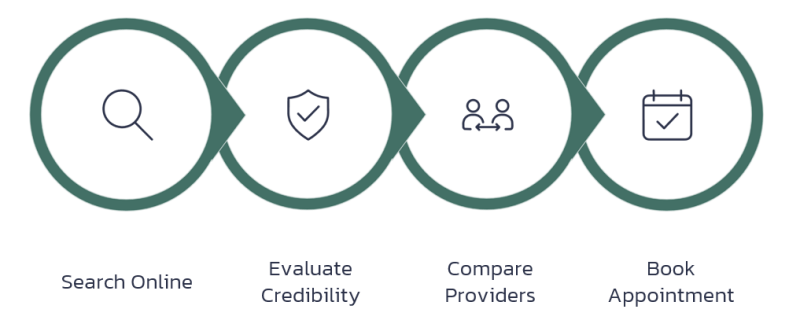
The first step usually begins with a search engine. Patients search for providers using keywords related to symptoms, medical specialties, treatment options, or locations. Search results often display local clinics, Google Business Profiles, review websites, and healthcare directories alongside the provider's official website.
Once a provider appears in search results, patients begin evaluating credibility. They examine star ratings, read patient reviews, compare physician qualifications, review available services, and assess how professionally the practice presents itself online. They may also visit social media pages to learn more about the organization's culture, educational content, and community involvement.
This digital evaluation process often determines whether patients proceed with scheduling an appointment. Even small details—such as recent patient reviews, clear contact information, online appointment booking, and educational blog articles—can positively influence decision-making.
Patients also value transparency. They appreciate providers who clearly communicate treatment options, explain procedures, answer frequently asked questions, and respond professionally to patient concerns. These actions demonstrate openness and reinforce confidence in the healthcare organization.
Because patients rely heavily on digital information, healthcare providers should ensure that every online touchpoint accurately reflects their expertise, professionalism, and commitment to quality care.
The Connection Between Trust and Patient Acquisition
Patient acquisition is more than attracting website visitors or generating inquiries. The goal is to build enough confidence that prospective patients feel comfortable choosing one healthcare provider over another. Online reputation plays a central role in this decision-making process because trust is often established before any direct interaction occurs.
Positive online reviews act as digital word-of-mouth recommendations. When prospective patients see that others have received compassionate care, timely communication, and successful treatment outcomes, they become more confident in the provider's ability to meet their own healthcare needs.
Trust is also reinforced through consistent branding and communication. A healthcare provider whose website, social media profiles, directory listings, and patient reviews all present accurate and consistent information appears more reliable than one with conflicting details or outdated content.
Educational content further strengthens credibility. Publishing informative articles about common health conditions, preventive care, treatment options, and wellness tips demonstrates medical expertise while helping patients make informed decisions. Rather than focusing only on promotional messaging, healthcare organizations can establish themselves as trusted sources of information by addressing patient concerns with clear and helpful content.
Over time, this trust translates into measurable business results. Patients who have confidence in a provider are more likely to book appointments, recommend the practice to family and friends, leave positive reviews after their visits, and return for future healthcare needs. These ongoing relationships contribute to sustainable patient acquisition while supporting long-term practice growth.
The Impact of Online Reviews on Patient Decisions
Online reviews have become one of the most influential factors in a patient's decision-making process. Before scheduling an appointment, many patients read reviews to learn about other people's experiences with a healthcare provider. They want to know whether the physician is knowledgeable, whether the staff is friendly, how long the wait times are, and whether patients felt comfortable during their visits.
Positive reviews help establish trust before a patient even contacts the practice. They provide social proof that the healthcare provider consistently delivers quality care and values of patient satisfaction. A steady stream of authentic, positive feedback also reassures prospective patients that they are making a well-informed decision.
Negative reviews, however, can discourage potential patients if they are left unanswered. While no healthcare organization can avoid every negative comment, the way it responds to criticism significantly influences public perception. A thoughtful, professional, and empathetic response demonstrates accountability and a genuine commitment to patient care. In many cases, prospective patients pay as much attention to how providers respond to reviews as they do to the reviews themselves.
Healthcare organizations should encourage satisfied patients to leave honest reviews after their appointments. This not only improves online visibility but also creates a balanced and trustworthy online reputation over time.
Strengthening Local Visibility Through Google Business Profile
When patients search for healthcare providers in their area, local search results often appear before traditional website listings. This makes a well-maintained Google Business Profile an essential part of online reputation management and patient acquisition.
A complete Google Business Profile includes accurate contact information, office hours, location details, website links, appointment options, service descriptions, and patient reviews. Maintaining this information ensures that patients can easily find reliable information when searching online.
Regularly updating the profile with recent photos, announcements, healthcare services, and educational posts also improves engagement. These updates signal that the practice is active and committed to communicating with current and prospective patients.
Local search engine optimization (Local SEO) further supports patient acquisition by helping healthcare providers appear in searches related to their specialty and geographic area. Consistent business information across healthcare directories, local listings, and the provider's website strengthens search engine trust and improves visibility.
As more patients rely on mobile searches to find nearby healthcare providers, optimizing local search presence becomes increasingly important for attracting qualified patients.
The Role of Social Media in Building Patient Trust
Social media has evolved beyond a platform for marketing promotions. Today, it serves as an important communication channel where healthcare organizations can educate, inform, and engage with their communities.

Patients often visit a healthcare provider's social media pages before scheduling appointments. They look for signs that the organization is professional, responsive, and actively involved in patient education. Regularly sharing health awareness campaigns, wellness tips, preventive care advice, physician introductions, and community events helps establish credibility while encouraging meaningful engagement.
Social media also humanizes healthcare organizations. Introducing medical staff, celebrating patient success stories (with appropriate consent), highlighting community outreach programs, and sharing behind-the-scenes content create stronger emotional connections with prospective patients.
Consistent communication across social platforms reinforces the organization's commitment to transparency and patient care. Rather than focusing exclusively on promotional content, healthcare providers should prioritize informative and educational posts that answer common health questions and encourage healthier lifestyles.
An active social media presence also provides another opportunity to address patient questions and respond professionally to comments. Timely and respectful interactions demonstrate that the organization values patient communication and is committed to providing exceptional service both online and offline.
Responding to Patient Reviews Professionally
Managing online reviews is not limited to collecting positive feedback. Healthcare providers should actively monitor review platforms and respond appropriately to both positive and negative comments.
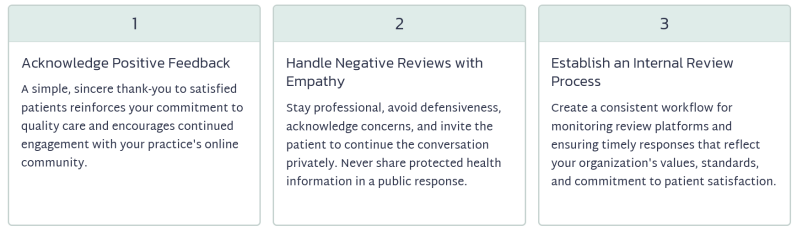
When responding to positive reviews, expressing appreciation helps strengthen patient relationships and encourages future engagement. A simple thank-you message demonstrates gratitude while reinforcing the organization's commitment to excellent care.
Negative reviews require a more thoughtful approach. Healthcare organizations should remain professional, empathetic, and respectful while protecting patient privacy. Instead of becoming defensive, providers should acknowledge concerns, express a willingness to resolve issues, and invite patients to continue the conversation privately whenever appropriate.
Professional responses show prospective patients that the organization listens to feedback and values for continuous improvement. Even when criticism cannot be fully resolved publicly, respectful communication helps preserve the provider's reputation and demonstrates accountability.
Healthcare organizations should also establish internal processes for monitoring reviews across multiple platforms, ensuring timely responses that reflect the organization's values and professionalism.
Monitoring Online Reputation Consistently
Online reputation management is an ongoing process rather than a one-time task. Patient opinions, online discussions, and digital content continue to evolve, making regular monitoring essential for maintaining a positive reputation.
Healthcare providers should routinely review patient feedback, search engine results, healthcare directories, social media mentions, and local listings. Monitoring these platforms allows organizations to identify concerns early, address misinformation, and maintain accurate business information.
Regular monitoring also provides valuable insights into patient expectations. Recurring compliments may highlight organizational strengths, while repeated concerns may reveal opportunities for improving patient experiences, communication, or operational processes.
Organizations that actively monitor their digital presence are better equipped to respond quickly to changing patient needs and protect their reputation before minor issues become larger challenges.
Research from Gartner continues to emphasize that delivering consistent customer experiences across digital channels strengthens trust, improves customer satisfaction, and supports long-term organizational growth. For healthcare providers, every online interaction contributes to the overall patient experience and influences future acquisition efforts.
Similarly, Forrester highlights that organizations focusing on customer trust, personalized engagement, and exceptional digital experiences are more likely to strengthen customer loyalty and long-term relationships. These findings reinforce the importance of maintaining a proactive approach to online reputation management within the healthcare industry.
Why Reputation Management Directly Influences Patient Acquisition
Patient acquisition is not driven by advertising alone. Trust, credibility, and consistent online engagement often determine whether prospective patients choose one healthcare provider over another.
A healthcare organization with numerous positive reviews, accurate online information, active social media engagement, educational resources, and responsive communication creates confidence before the first appointment is ever scheduled.
As patients increasingly rely on digital research when selecting healthcare providers, organizations that invest in online reputation management position themselves for sustainable growth. Every positive review, every informative article, every professional response, and every educational social media post contribute to building stronger patient relationships and attracting new patients.
A well-managed online reputation not only supports immediate patient acquisition but also strengthens long-term loyalty, referrals, and overall practice success in an increasingly competitive healthcare marketplace.
Common Online Reputation Management Mistakes to Avoid
While many healthcare organizations recognize the importance of maintaining a positive online reputation, some unintentionally make mistakes that limit their ability to attract new patients. One of the most common mistakes is treating online reputation management as a one-time project rather than an ongoing strategy. Patient expectations, online reviews, and digital platforms change continuously, so healthcare providers must consistently monitor and improve their online presence.
Another common mistake is ignoring patient feedback. Every review represents an opportunity to understand patient experiences and identify areas for improvement. Organizations that fail to respond to reviews—especially negative ones—may appear unresponsive or uninterested in-patient concerns. Even a simple, professional response can demonstrate empathy, accountability, and a willingness to improve.
Some healthcare providers also overlook the importance of maintaining accurate online information. Outdated phone numbers, incorrect office hours, broken website links, or inconsistent addresses across directories can frustrate potential patients and reduce trust. Regularly reviewing and updating business information helps create a seamless patient experience from the very beginning.
Another challenge is publishing overly promotional content without providing educational value. Patients visit healthcare websites and social media pages to find reliable information that helps them make informed decisions. Organizations that consistently share educational articles, wellness tips, preventive care advice, and treatment information are more likely to establish themselves as trusted healthcare resources.
Best Practices for Building a Strong Online Reputation
Successful online reputation management requires a proactive and patient-centered approach. Every interaction, whether online or offline, contributes to how patients perceive a healthcare organization. Developing a consistent strategy helps providers build trust while supporting long-term patient acquisition.
Healthcare organizations should focus on delivering exceptional patient experiences during every stage of the healthcare journey. Positive in-person experiences naturally encourage satisfied patients to leave authentic online reviews, which become valuable recommendations for future patients.
Maintaining an informative and user-friendly website is important. Patients should be able to quickly find physician profiles, available services, insurance information, office locations, contact details, and appointment scheduling options. Educational blog articles can further strengthen credibility by answering common health questions and demonstrating medical expertise.
Social media should also be used to educate and engage rather than simply advertise. Sharing health awareness campaigns, seasonal wellness advice, preventive care information, patient success stories (with proper consent), and community involvement helps create meaningful connections with current and prospective patients.
Healthcare providers should also establish a routine for monitoring reviews, responding professionally, and updating digital profiles. Consistent management demonstrates that the organization values patient communication and remains committed to delivering high-quality care.
To build a strong and trustworthy online presence, healthcare organizations should focus on these essential practices:
- Encourage satisfied patients to leave honest reviews while maintaining accurate business information across all digital platforms.
- Publish educational content regularly and respond professionally to patient feedback to strengthen trust and improve patient engagement.
These simple yet effective practices help healthcare providers create lasting relationships with patients while improving their online visibility.
The Future of Online Reputation Management in Healthcare
Technology continues to reshape how patients search for healthcare providers and interact with medical organizations. Artificial intelligence, predictive analytics, voice search, and personalized digital experiences are transforming online reputation management into a more data-driven process.
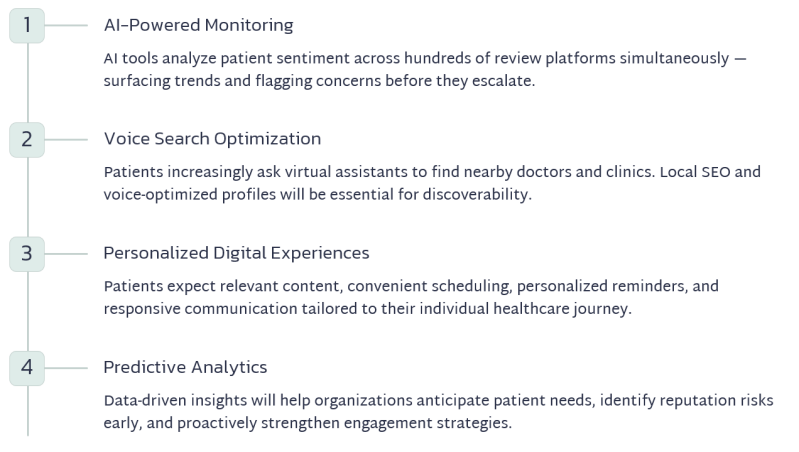
AI-powered tools now help healthcare organizations monitor online reviews, analyze patient sentiment, identify emerging trends, and respond more efficiently to patient feedback. Instead of manually reviewing hundreds of comments across multiple platforms, providers can quickly identify recurring concerns and address them before they affect their reputation.
Voice search is also becoming increasingly popular. Patients frequently use virtual assistants to search for nearby doctors, urgent care centers, dental clinics, or specialists. Optimizing online profiles for voice search and local SEO will become even more important as digital search behavior continues to evolve.
Personalized digital experiences will also play a larger role in patient acquisition. Patients increasingly expect healthcare organizations to provide relevant educational content, convenient appointment scheduling, personalized reminders, and responsive communication throughout their healthcare journey. Providers that successfully combine technology with compassionate patient care will be well positioned for future growth.
As digital healthcare continues to expand, organizations that invest in transparent communication, trustworthy content, and patient-focused online experiences will strengthen both their reputation and their competitive advantage.
Conclusion
Online reputation management has become a critical factor in attracting and retaining patients in today's digital healthcare environment. Patients rely heavily on online information when selecting healthcare providers, making every review, website visit, social media interaction, and search result an important part of the decision-making process.
A positive online reputation builds confidence before a patient schedules an appointment. By maintaining accurate business information, responding professionally to patient feedback, publishing educational content, and engaging consistently across digital platforms, healthcare organizations can strengthen patient trust and improve long-term relationships.
Reputation management should not be viewed simply as a marketing initiative. It is an ongoing commitment to delivering excellent patient experiences, maintaining transparent communication, and continuously improving digital engagement. Healthcare providers that prioritize these efforts are more likely to attract qualified patients, increase patient satisfaction, encourage positive referrals, and build sustainable practice growth.
As technology continues to evolve, online reputation management will become even more important in shaping patient expectations and healthcare choices. Organizations that embrace digital innovation while remaining focused on trust, empathy, and exceptional patient care will continue to stand out in an increasingly competitive healthcare marketplace.
For healthcare organizations looking to strengthen patient outreach with accurate healthcare data, EprofileTech offers verified healthcare email databases that support targeted marketing and patient engagement strategies. Learn more here:
#OnlineReputationManagement #HealthcareMarketing #PatientAcquisition #HealthcareSEO #DigitalMarketing #MedicalMarketing #PatientExperience #HealthcareLeadership #DigitalHealth #LocalSEO #HealthcareBranding #HealthcareBusiness #PracticeGrowth #GoogleBusinessProfile #PatientEngagement #HealthcareInnovation #MedicalPractice #HealthcareProviders #ContentMarketing #HealthcareTechnology
About the Author

I'm James Harris, a Digital Marketing Specialist at EprofileTech LLC, specializing in SEO, content marketing, and B2B lead generation.