Over the past few years, Generative AI has captured global attention. Organizations across nearly every industry are experimenting with tools capable of generating text, images, code, presentations, and summaries in seconds. Generative AI has already transformed how people work. Employees use AI copilots to draft emails, summarize meetings, create reports, brainstorm ideas, and accelerate productivity. Businesses are embedding AI into customer service, sales enablement, marketing, and knowledge management platforms.
But while Generative AI represents a major leap forward, it is only the beginning.
The next evolution is already emerging: Agentic AI.
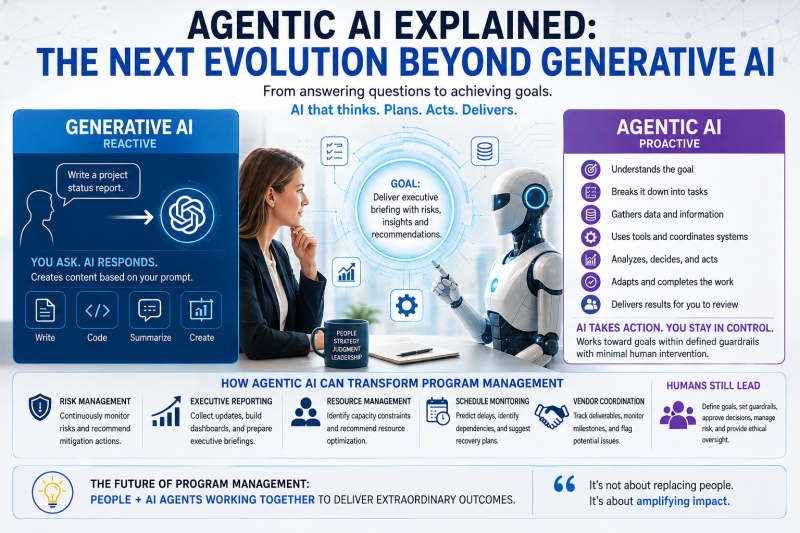
Unlike traditional Generative AI systems that primarily generate content or respond to prompts, Agentic AI systems are designed to take action, make decisions, coordinate workflows, and execute tasks autonomously.
This shift has the potential to fundamentally transform how organizations operate.
Understanding the Difference Between Generative AI and Agentic AI
To understand Agentic AI, it helps to first understand the limitations of Generative AI.
Generative AI systems are highly effective at producing outputs such as:
- Text
- Images
- Summaries
- Recommendations
- Code
- Responses to questions
However, most Generative AI systems are reactive.
They wait for a prompt, generate a response, and stop.
For example:
- A chatbot answers a customer question
- A copilot drafts an email
- An AI assistant summarizes a meeting
The human user still performs the next action.

Agentic AI changes this model.
Agentic AI systems are designed to:
- Understand goals
- Plan tasks
- Make decisions
- Interact with systems
- Execute workflows
- Monitor outcomes
- Adapt based on feedback
In other words, Agentic AI moves from simply generating information to actively performing work.
What Makes an AI System "Agentic"?
An AI system becomes "agentic" when it demonstrates a degree of autonomy and goal-oriented behavior.
Rather than requiring continuous human direction, the AI agent can independently determine how to accomplish a task.
Key characteristics of Agentic AI include:
Goal-Oriented Execution
The AI works toward achieving an objective rather than simply responding to a single request.
Multi-Step Reasoning
The AI can break complex tasks into multiple actions and execute them sequentially.
System Interaction
Agentic AI can interact with business systems, APIs, workflows, databases, and applications.
Decision-Making
The AI can evaluate options and determine the best course of action based on rules, context, or learned patterns.
Adaptability
The AI can respond to changing conditions and adjust workflows dynamically.
This combination of capabilities allows Agentic AI to function more like a digital worker than a traditional software tool.
Real-World Examples of Agentic AI
Many organizations are already exploring early forms of Agentic AI.
Customer Service
Instead of simply answering questions, an AI agent may:
- Update account information
- Process refunds
- Schedule appointments
- Resolve billing disputes
- Escalate complex issues automatically
IT Operations
AI agents can:
- Monitor infrastructure
- Detect incidents
- Open tickets
- Execute remediation workflows
- Notify support teams
Sales and Marketing
AI agents may:
- Qualify leads
- Personalize outreach
- Schedule follow-ups
- Generate proposals
- Update CRM systems automatically
Healthcare
AI agents can assist with:
- Prior authorization workflows
- Appointment coordination
- Claims processing
- Patient communication
- Documentation management
Supply Chain Operations
AI agents may:
- Monitor inventory levels
- Predict shortages
- Trigger replenishment workflows
- Coordinate supplier communications
- Optimize logistics decisions
These examples demonstrate how Agentic AI moves beyond assistance into operational execution.
Why Organizations Are Interested in Agentic AI
Organizations are under constant pressure to improve:
- Operational efficiency
- Customer experience
- Decision-making speed
- Productivity
- Scalability
Traditional automation solutions often rely on rigid rules and predefined workflows.
Agentic AI introduces greater flexibility and intelligence into automation.
Instead of programming every possible scenario, organizations can deploy AI agents capable of adapting to changing situations and making context-aware decisions.
Potential benefits include:
- Faster response times
- Reduced manual work
- Lower operational costs
- Improved customer satisfaction
- Increased scalability
- Better workflow orchestration
For many organizations, Agentic AI represents the next major evolution of digital transformation.
The Relationship Between Agentic AI and Automation
Agentic AI is not replacing automation—it is enhancing it.
Traditional robotic process automation (RPA) works best with highly structured, repetitive tasks.
However, many business processes involve:
- Unstructured data
- Human judgment
- Exceptions
- Variable workflows
- Context-dependent decisions
Agentic AI helps bridge this gap.
AI agents can combine:
- Generative AI
- Machine learning
- workflow orchestration
- business rules
- API integrations
- reasoning capabilities
to create more intelligent and adaptive automation solutions.
In many ways, Agentic AI represents the convergence of AI and enterprise automation.
Governance and Risk Considerations
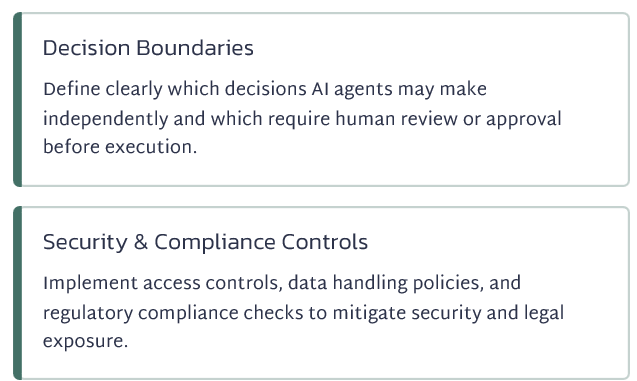
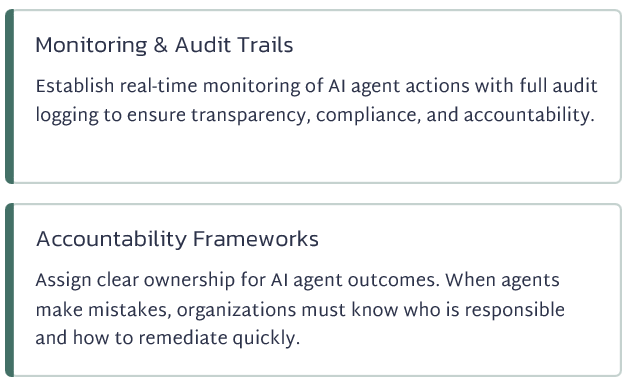
As organizations adopt Agentic AI, governance becomes critically important.
Unlike passive AI tools, AI agents can perform actions that directly affect business operations, customers, and data.
This introduces important questions:
- What decisions can AI agents make independently?
- What actions require human approval?
- How should AI actions be monitored?
- What controls should be implemented?
- How do organizations manage security and compliance risks?
- Who is accountable when AI agents make mistakes?
Without strong governance, organizations may expose themselves to operational, regulatory, or reputational risks.
Program managers, PMOs, risk leaders, and executive stakeholders will play essential roles in establishing oversight frameworks for Agentic AI initiatives.
The Human Role Is Still Essential
One of the biggest misconceptions about Agentic AI is that it will completely replace human workers.
In reality, most organizations will use AI agents to augment employees rather than eliminate them.
Humans will continue to provide:
- Strategic decision-making
- Relationship management
- Ethical oversight
- Creativity
- Exception handling
- Governance
- Leadership
The most successful organizations will likely be those that combine human expertise with AI-enabled execution. The future of work is not humans versus AI.
It is humans working alongside increasingly capable AI systems.
Why Program Managers Need to Understand Agentic AI
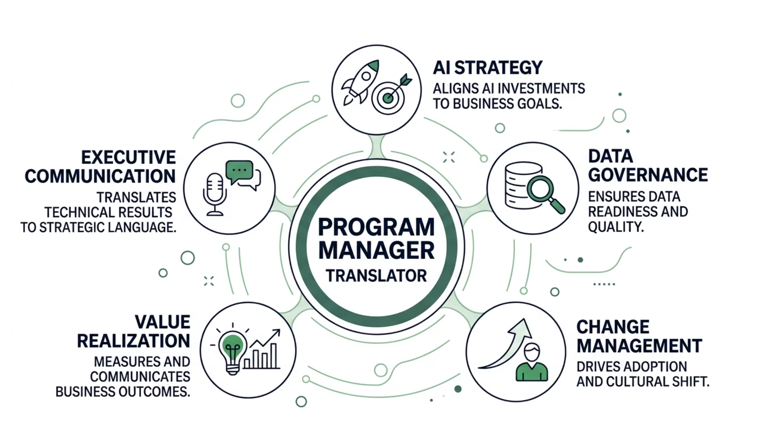
As organizations begin adopting Agentic AI, Program Managers will play a critical role in leading transformation efforts.
These initiatives often involve:
- Cross-functional coordination
- Process redesign
- Governance frameworks
- Change management
- Technology integration
- Vendor management
- Executive communication
Program Managers will need to help organizations answer key questions:
- Which processes should be automated?
- What governance is required?
- How should success be measured?
- How do teams adapt to new operating models?
- What risks must be managed?
AI transformation is not simply a technology initiative—it is an operational and organizational transformation effort.
Strong program leadership will become increasingly important as organizations scale AI agents across the enterprise.
The Future of Enterprise AI
Generative AI introduced organizations to AI-powered productivity. Agentic AI introduces the possibility of AI-powered execution.
Over the next several years, organizations will likely move from:
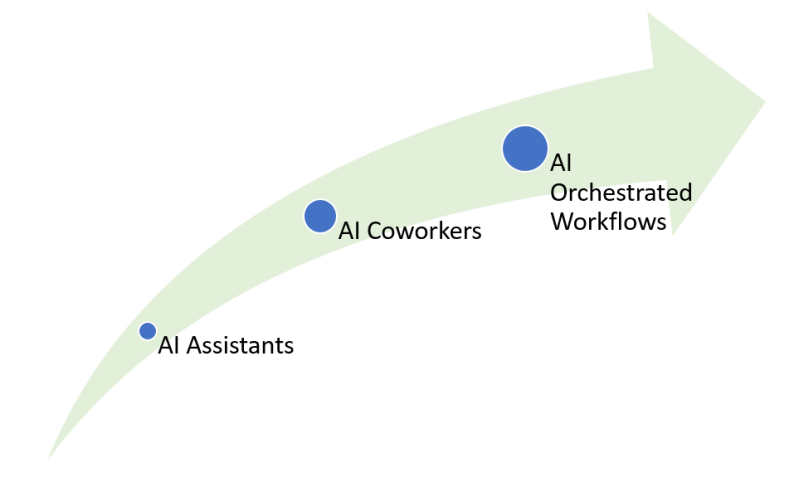
This transition could reshape:
- Customer service
- Operations
- IT support
- Healthcare
- Supply chain management
- Finance
- Human resources
- Project delivery
Organizations that prepare early will be better positioned to leverage these emerging capabilities responsibly and effectively.
Final Thoughts
Agentic AI represents one of the most important shifts in the evolution of enterprise technology. While Generative AI focuses on creating content and insights, Agentic AI focuses on taking action and executing work. The technology is still evolving, but the direction is becoming increasingly clear: organizations are moving toward AI systems that can operate with greater autonomy, intelligence, and adaptability.
Success, however, will depend on more than technology alone.
Organizations will need strong governance, thoughtful leadership, clear business objectives, and effective program management to realize the full value of Agentic AI.
The future of AI is not just about generating answers.
It is about enabling intelligent action at scale.

About the Author
Kimberly Wiethoff, MBA, PMP, PMI-ACP is a Senior Program Manager specializing in enterprise digital transformation, AI-enabled delivery, PMO leadership, and Agile program execution. Through Managing Projects the Agile Way, she helps project leaders prepare for the future of work by combining proven program management practices with emerging AI technologies.
Managing Projects The Agile Way
#AgenticAI #ArtificialIntelligence #GenerativeAI #EnterpriseAI #DigitalTransformation #Automation #FutureOfWork #AITransformation #ProgramManagement #BusinessTransformation #IntelligentAutomation #AILeadership #EmergingTechnology #EnterpriseTransformation #WorkflowAutomation #Innovation #ChangeManagement #PMO #ManagingProjectsTheAgileWay #Leadership
Download Document, PDF, or Presentation
Author: Kimberly Wiethoff, MBA, PMP, PMI-ACP