Program Increment (PI) Planning is the heartbeat of the Scaled Agile Framework (SAFe®). It’s where strategy meets execution, where cross-functional teams align on a shared vision, and where dependencies, risks, and objectives are tackled head-on. If you’re a project manager navigating the world of SAFe (Scaled Agile Framework), one term you’ll hear frequently is PI Planning—short for Program Increment Planning. It’s one of the most essential, high-impact ceremonies in SAFe, and mastering it is key to driving alignment and delivery across multiple Agile teams.
So, what exactly is PI Planning, and how can project managers contribute to or facilitate it effectively? For project managers stepping into SAFe environments, PI Planning can feel intense, fast-paced, and unlike anything in traditional project management. But with the right preparation and mindset, you can play a vital role in making PI Planning not only effective—but transformative.
This guide breaks it down step-by-step and provides actionable tips to help you succeed.
🔍 What Is PI Planning?
Program Increment (PI) Planning is a two-day, cadence-based event where all Agile teams on an Agile Release Train (ART) come together to plan the work for the next increment (typically 8–12 weeks). It’s a cornerstone of SAFe that ensures alignment, collaboration, and transparency across teams.
- Define and align on program objectives
- Identify team and cross-team dependencies
- Plan and commit to the next Program Increment
PI Planning sets the tone and direction for the entire ART.
The goal: Align on business objectives, dependencies, priorities, and delivery plans across all teams in the ART.
👥 Who Participates?
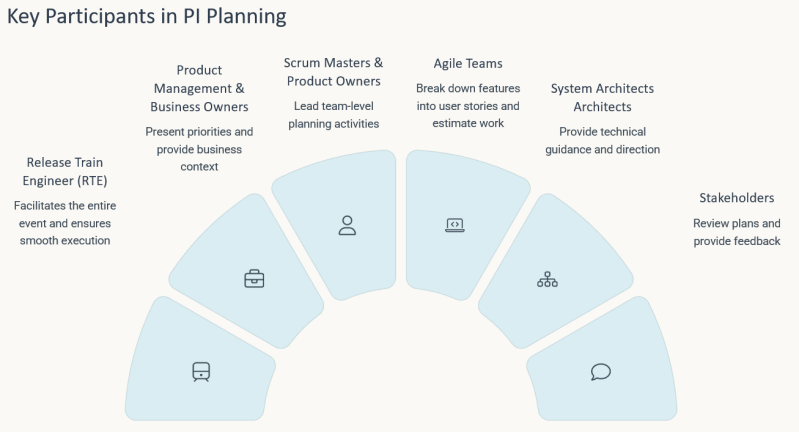
- Release Train Engineer (RTE) – Facilitates the event
- Product Management & Business Owners – Present priorities and business context
- Scrum Masters & Product Owners – Lead team-level planning
- Agile Teams – Break down features into user stories and estimate work
- System Architects – Provide technical guidance
- Stakeholders – Participate in reviewing plans and providing feedback

🛠️ Project Manager’s Role in PI Planning
If you’re a project manager, your role may vary based on your alignment with the ART. You might serve as:
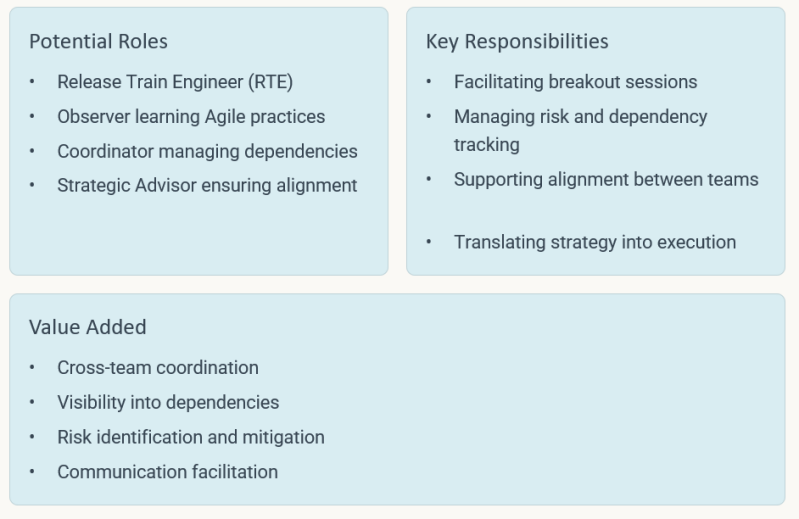
- RTE (if you’re facilitating the event)
- Observer (learning Agile practices)
- Coordinator (managing cross-team dependencies)
- Strategic Advisor (ensuring alignment with business goals)
- Facilitating breakout sessions
- Managing risk and dependency tracking
- Supporting alignment between business and technical teams
- Helping translate strategy into execution
No matter your role, here’s how to make a difference.
✅ Pre-PI Planning: Set the Stage
Understand the Business Context
- Get briefed on portfolio-level epics, upcoming features, and OKRs.
- Collaborate with Product Management and Business Owners to understand strategic goals.
Confirm Readiness
- Are Features well defined?
- Are teams staffed and available?
- Are the environments and tooling (e.g., Jira, ADO, Miro) prepped for virtual or in-person collaboration?
Coordinate Cross-Team Dependencies
- Work with Scrum Masters and POs to identify handoffs, integration points, and delivery overlaps.
Align Tooling and Logistics
- Ensure digital tools (e.g., Jira, Miro, ADO) are ready.
- For remote PI Planning: Set up breakout rooms, timeboxes, and communication channels.
🧩 During PI Planning: Be the Glue
Support Day 1 Activities
- Help communicate the vision and priorities.
- Assist teams as they estimate work, identify risks, and build iteration plans.
Support Breakout Sessions
- Help teams clarify dependencies and risks.
- Ensure cross-team blockers are escalated early.
Facilitate Communication
- Coordinate with RTE, Product Managers, and Scrum Masters.
- Keep leadership looped in on alignment issues or scope changes.
Encourage Team Collaboration
- Foster inter-team communication during dependency mapping and negotiation.
Manage Risks and Escalations
- Guide teams through ROAMing risks (Resolved, Owned, Accepted, Mitigated).
- Help escalate blockers that affect multiple teams.
Prepare for Final Plan Review
- Ensure each team’s plan includes:
- Committed objectives
- Stretch objectives
- Team confidence vote
📈 Post-PI Planning: Drive Execution
Publish and Share the PI Plan
- Document team objectives and dependencies in a central workspace (e.g., Confluence or ADO).
Facilitate ART Syncs and Scrum of Scrums
- Support the RTE or act as liaison to ensure ongoing alignment during the PI.
Track and Communicate Progress
- Use dashboards, burn-up charts, and flow metrics to keep stakeholders informed.
Support PI Execution
- Help monitor progress via Scrum of Scrums, ART Syncs, or dashboards.
- Track risks, dependencies, and impediments throughout the PI.
Enable Continuous Improvement
-
- Participate in the Inspect & Adapt workshop.
- Encourage feedback on what worked—and what didn’t—in the last planning cycle.
After PI Planning concludes, your role shifts to execution support. Document all team objectives and dependencies in a central location like Confluence or Azure DevOps. Support the RTE in facilitating regular ART Syncs and Scrum of Scrums to maintain alignment throughout the PI execution period.
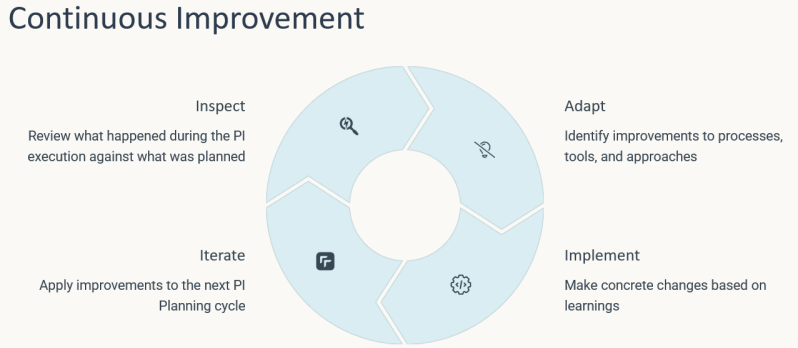
Participate actively in the Inspect & Adapt workshop at the end of each PI. Encourage honest feedback about what worked and what didn't during both planning and execution. Remember that PI Planning itself is an Agile process - each cycle is an opportunity to improve the event for next time.
Common PI Planning Challenges
Dependency Overload
When teams discover too many cross-team dependencies, planning becomes complex and risky. Help teams identify the most critical dependencies and negotiate realistic delivery sequences. Consider suggesting API contracts or interface agreements to reduce tight coupling
Distributed Teams
Remote or hybrid PI Planning introduces communication challenges. Ensure digital tools are accessible to all participants, establish clear communication protocols, and create dedicated facilitators for remote breakout rooms to keep everyone engaged.
Capacity Misalignment
Teams often struggle with balancing ambition and reality in their commitments. Guide teams to use historical velocity data when available, account for all non-feature work, and build in buffers for the unexpected to create realistic plans.
🧭 Tips for Success
- Plan for iteration – PI Planning is Agile too; every cycle is a chance to improve.
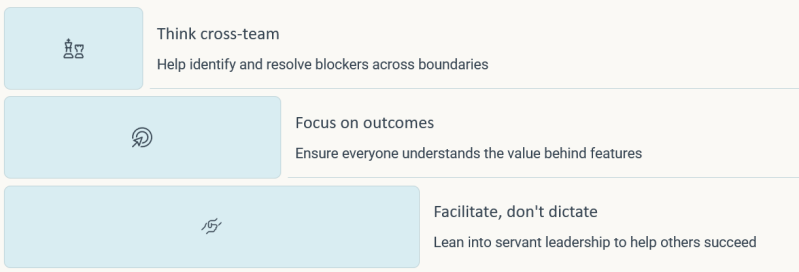
- Think cross-team – Help teams identify and resolve blockers across boundaries.
- Focus on outcomes, not just output – Ensure everyone understands the value behind each feature.
- Facilitate, don’t dictate – Lean into a servant leadership style to help others succeed.
- Plan the planning – Don’t underestimate the logistics and prep work required.
- Create visual clarity – Use online whiteboards or printed boards for shared understanding.
- Timebox religiously – Keep events on track with clear facilitation and breaks.
- Foster psychological safety – Let teams speak up about risks, issues, or blockers.
PI Planning Metrics and Success Indicators
Tracking these metrics helps gauge the health of both your PI Planning event and the subsequent execution. Low confidence votes or unresolved dependencies are early warning signs that should be addressed before finalizing the plan. During execution, monitor objective achievement to identify trends and improvement opportunities.
Team Confidence
Average confidence vote across teams should be 8 or higher (on a scale of 1-10) for a healthy plan
Dependency Resolution
Percentage of identified dependencies that have clear owners and delivery dates
Objective Achievement
Target percentage of committed objectives completed by the end of the PI
Risk Categorization
All identified risks should be properly ROAMed with clear ownership
Strategic Mindset for Project Managers
As a project manager in PI Planning, your greatest value comes from enabling others to succeed. Adopt a strategic mindset that prioritizes cross-team coordination and outcome-focused planning. Remember that your role is to facilitate the process, not control it - empowering teams to make their own commitments leads to greater ownership and accountability.
🚀 Final Thoughts
PI Planning is more than just a meeting—it’s a powerful alignment engine that fuels Agile delivery at scale. As a project manager, your organizational and facilitation skills can make you an invaluable asset before, during, and after PI Planning.
Embrace your evolving role, support the Agile Release Train, and help turn strategic vision into synchronized execution.
#SAFePIPlanning #AgileReleaseTrain #AgileProjectManagement #ScaledAgile #ProjectManagerTips #RTE #ProgramIncrement #AgileFacilitation #ManagingProjectsTheAgileWay #SAFeEvents

About the Author
Kimberly Wiethoff, MBA, PMP, PMI-ACP is an AI Transformation Program Leader specializing in enterprise digital transformation, AI-enabled delivery, PMO leadership, AI governance, Agile program execution, cloud transformation, and complex portfolio delivery.
Through Managing Projects the Agile Way, she shares practical strategies for modernizing project and program delivery, strengthening PMO leadership, and preparing organizations and leaders for the future of AI-enabled program management.
Download Document, PDF, or Presentation
Author: Kimberly Wiethoff, MBA, PMP, PMI-ACP